I would like to believe that when I like an expensive wine, it is because I have detected something real: more structure, a longer finish, perhaps a grape that attended a better school.
I would also like to believe the number beside it on the wine list has had nothing to do with this.
The research is unhelpful on that second point.
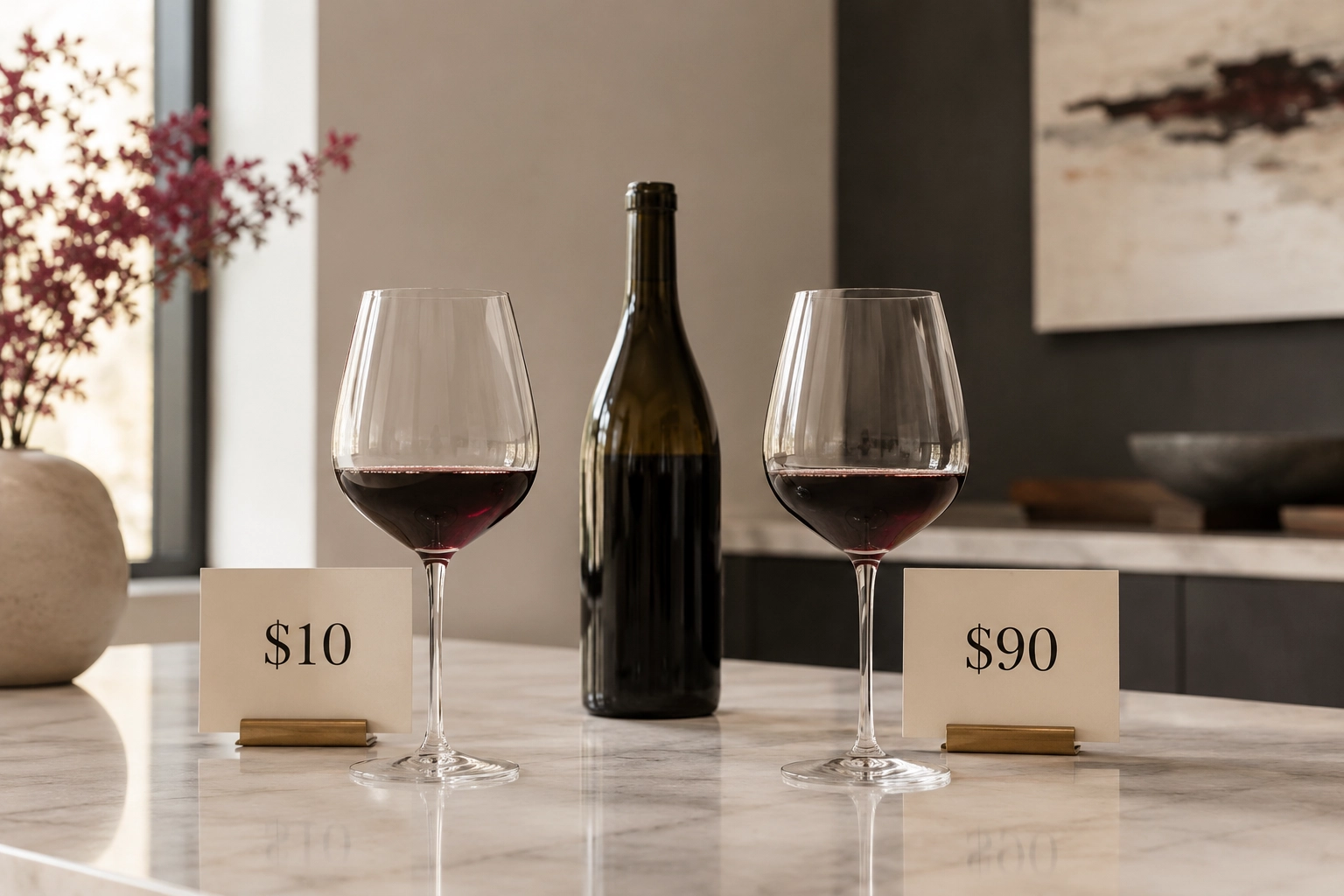
The $90 wine and the $10 wine were the same wine
In a now-famous experiment, researchers from Caltech and Stanford placed 20 red-wine drinkers in an fMRI scanner and told them they would be sampling five different Cabernet Sauvignons.
There were only three.
A wine that retailed for $5 was served once with its real price and again with a fictional price of $45. A $90 wine was also served twice: once identified as $90 and once as $10. The liquid remained exactly the same. Only the number on the screen changed. [1]
Participants rated the wines as more pleasant when they believed they were drinking the more expensive versions. Their ratings of the wines’ intensity did not increase. The pleasure did.
THE PRICE
It would be easy to dismiss this as people giving the answer they thought sophisticated wine drinkers were supposed to give. The brain scans made that explanation less satisfying.
Higher displayed prices were accompanied by greater activity in the medial orbitofrontal cortex, a region associated with experienced pleasantness. The researchers did not find the same price effect in the primary areas responsible for basic taste processing. When the participants returned eight weeks later and tasted the wines without prices, the earlier differences in enjoyment disappeared. [1]
In other words, the number did not appear to make the wine chemically stronger, sweeter or more intense. It changed the value the brain assigned to the experience.
The tongue supplied the same wine. The brain supplied a better review.
Sometimes the cheap label does more damage than the expensive one does magic
A later study repeated the basic idea with three red wines that each retailed for €12. During different tastings, those wines appeared with bottle prices of €3, €6 or €18.
Once again, higher displayed prices produced higher pleasure ratings, whether participants supposedly paid for the samples or received them free. [2]
But the most interesting finding was where the difference came from.
Compared with a separate blind tasting, the €18 cue produced only a small increase in enjoyment. The €3 cue produced a much larger decrease. The inexpensive label was not merely failing to impress people. It was making the wine less pleasurable. [2]
Sometimes “cheap” arrives as an instruction to start looking for what is wrong.
The researchers found that regions involved in valuation, reward and affective regulation helped connect the price information to the reported experience. They described the result as a form of marketing placebo effect—not because the pleasure was imaginary, but because an external cue changed the experience while the underlying product remained constant. [2]
Now hide the bottle
This still leaves a different question: Are more expensive wines actually more enjoyable when nobody knows what they cost?
Researchers examined 6,175 ratings from 506 people tasting 523 wines ranging from $1.65 to $150 per bottle. The tastings were double-blind, meaning neither the drinker nor the person pouring knew the wine’s identity or price. [3]
Among participants without wine training, the relationship between price and enjoyment was small and negative. On average, they liked the more expensive wines slightly less.
People with some wine training showed a different pattern: the relationship between price and enjoyment was nonnegative and possibly positive, although the evidence for that expert effect was weaker. [3]
That does not prove a $12 bottle and a $200 bottle are equivalent. The study measured how much people enjoyed the wines. It did not attempt to score technical construction, rarity, aging potential, production methods or whether a bottle was representative of a celebrated vineyard.
But enjoyment is, inconveniently, the thing most of us believe we are paying for.
The blind results suggest that a higher price is not a reliable shortcut to greater pleasure for an ordinary wine drinker. Once the price is visible, however, it can help create the very pleasure it appeared to predict.
Price is both information and ingredient
We often talk about taste as though it begins when something touches the tongue. By then, the experience is already underway.
The label has been read. The bottle has been handled. Someone has mentioned the vineyard, the vintage or the impossible reservation. The wine has been poured into a particular glass in a particular room by someone who may have announced, with appropriate gravity, that this bottle is special.
Our brains do not discard that information and wait patiently for an objective chemical report. They use expectation to interpret what comes next.
This does not require wine snobbery. It requires a human brain presented with an ambiguous experience and a conspicuously useful clue.
Sometimes the higher price reflects something real. Sometimes it is functioning largely as a signal. Either way, once we know it, it joins the experience.
That is the broader lesson hiding inside the bottle. Luxury is rarely only the object. It is also the anticipation, presentation, confidence, story and setting surrounding it. Those things do not merely decorate an experience. Under the right conditions, they help construct one.
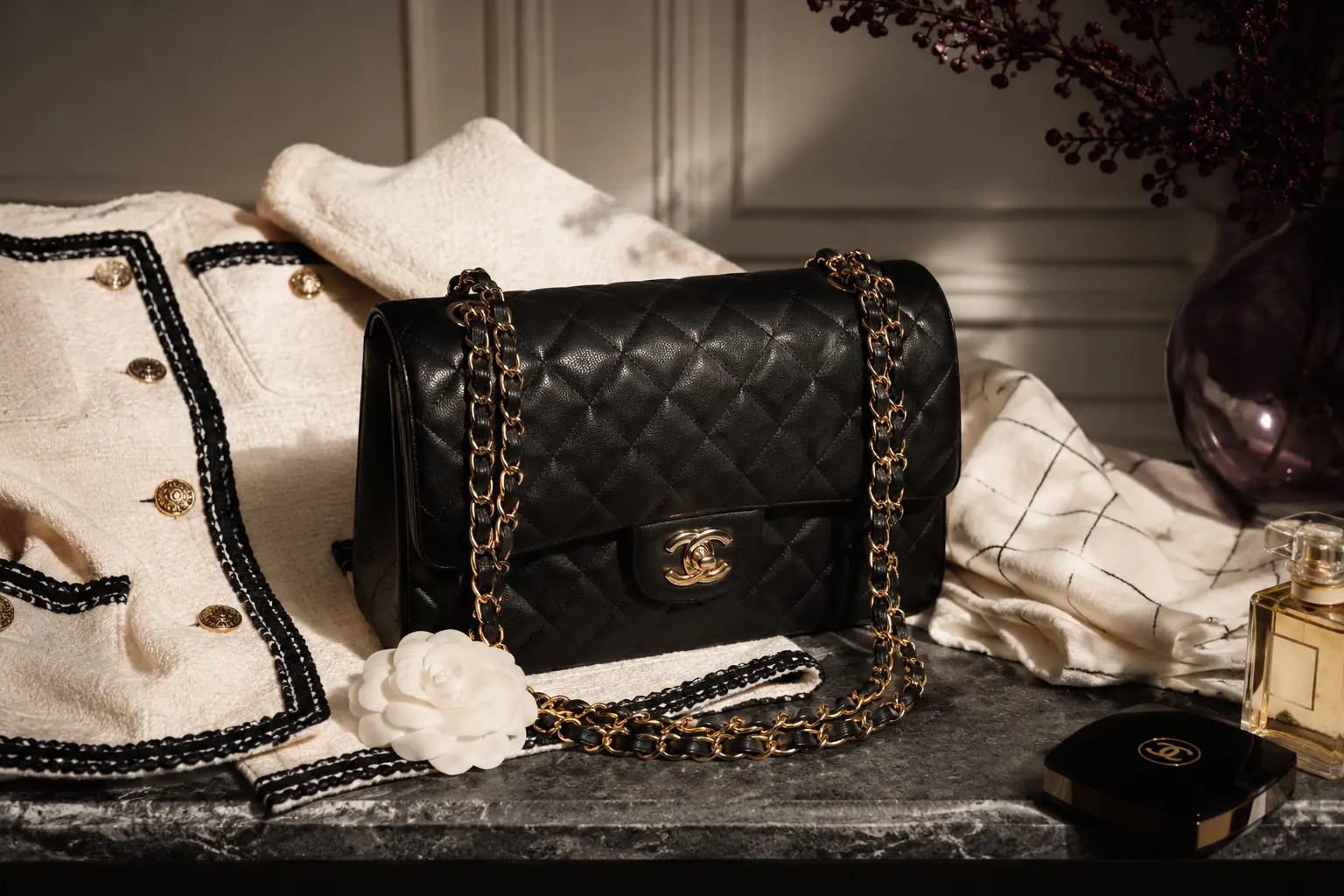
The Chanel example is not identical to putting a fictional price on a glass of wine. The craftsmanship is real: Chanel describes its couture in terms of meticulous handwork, specialized ateliers and jewel-like buttons, while the house says its handbags are handcrafted in precious materials. The Boy bag is officially named for Arthur “Boy” Capel. [4]
The story did not create those details. It directed attention toward them.
That distinction matters. But so does the mechanism. Once we know what to look for, we may genuinely experience the object differently.
The story becomes part of the pleasure.
Enjoy the story. Know what it adds.
For the wine you plan to drink regularly, try choosing before you see the label and price. You may still prefer the expensive one. The useful part is discovering whether you do without its reputation in the room.
A celebration is a different purchase. The vineyard, the vintage, the person who brought the bottle, and the pleasure of opening it can all matter. There is no need to subtract the occasion from an evening you are enjoying.
The mistake is not enjoying the story. It is treating that enjoyment as proof that the liquid must be better.
The expensive wine is allowed to win. It just helps to know what won you over.
Sources + Methodology
[1] Plassmann and colleagues (2008)
Plassmann, O’Doherty, Shiv and Rangel, 2008. Twenty participants sampled three Cabernet Sauvignons during fMRI scanning while believing they were tasting five. Two wines were presented under prices differing by a factor of nine: $5 versus $45 and $10 versus $90. Higher price cues increased reported pleasantness and activity in the medial orbitofrontal cortex; intensity ratings did not increase. A blind follow-up eight weeks later found that the price-linked differences in reported enjoyment disappeared. This was a small, controlled study involving deception, so it is strongest as evidence that price can affect experience—not as an estimate of how large the effect will be in every real-world tasting.
[2] Schmidt and colleagues (2017)
Schmidt, Skvortsova, Kullen, Weber and Plassmann, 2017. Researchers recruited 54 people and analyzed usable fMRI data from 30 after predefined exclusions, most commonly excessive movement. Participants repeatedly tasted three wines, each retailing for €12, under displayed prices of €3, €6 and €18. The behavioral price effect was statistically clear. A later comparison with blind ratings indicated that the low-price cue accounted for most of the change. The authors found evidence connecting the effect to valuation and affective-regulation systems, while also acknowledging limitations in portions of the whole-brain statistical analysis.
[3] Goldstein and colleagues (2008)
Goldstein, Almenberg, Dreber, Emerson, Herschkowitsch and Katz, 2008. The researchers analyzed 6,175 observations from 17 double-blind tastings involving 506 volunteer participants and 523 wines priced from $1.65 to $150. The sample was large and broad but was not a randomized laboratory comparison of otherwise identical bottles. It measured subjective enjoyment rather than every possible definition of wine quality. The authors also noted potential selection bias because the participants were unpaid volunteers and may have included disproportionate numbers of highly educated people and people connected with food or wine.
Chanel sources. Chanel describes Haute Couture as involving extensive handwork, specialized ateliers and jewel-like buttons; it describes its handbags as handcrafted in precious materials. The house identifies Arthur “Boy” Capel as Gabrielle Chanel’s great love and the namesake of the Boy bag. The love-letter compartment remains best treated as enduring Chanel lore rather than a fully documented historical fact.