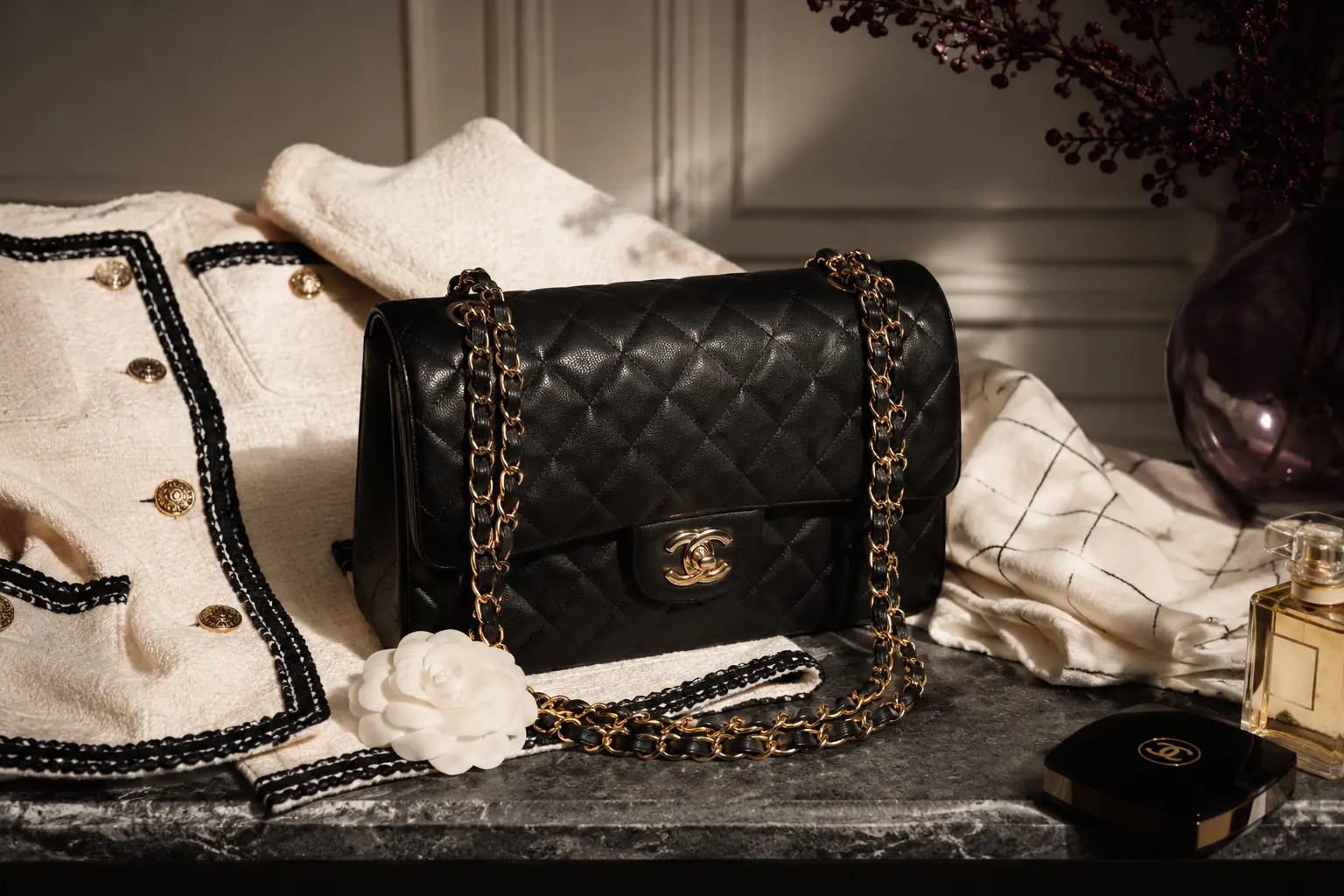
My mother, Pia, introduced me to the phrase investment piece. She had worked for Chanel, so it arrived with maternal authority, professional provenance and, I now realize, excellent brand training. Her advice was disciplined: buy one beautiful, enduring thing, look after it and stop paying for approximations.
Pia meant restraint. I heard a very elegant permission slip.
Early in our marriage, my husband and I kept our finances separate. This was sensible for us and spectacular news for Chanel. If I wanted a jacket with hand-finished braid and a price capable of changing the temperature in the room, I bought it with my own money. I did not need permission. I did need a better noun.
“Investment piece” allowed an extravagant purchase to arrive dressed as prudence. I worked in marketing. I knew exactly what language could make a person feel; I was willing to use it on myself anyway.
I expected the math to embarrass the phrase. Annoyingly, it did not laugh Pia out of the room. It merely asked several expensive follow-up questions: Which bag? Bought when? In what condition? Sold where? And how much of the glamorous resale price actually reaches you?
That is the useful version of this argument. A beautiful bag can return years of use, pleasure, confidence and social ease. A very small number can also return serious money. Those are all forms of value. They are not the same calculation.
A beautiful, expensive bag can do at least four jobs. Only one of them deposits money.
Use
It completes the wardrobe, survives ordinary life and gets carried instead of protected like a minor royal.
Social ease
In a room where the dress code is unwritten and everyone else somehow received the memo, it can make you feel finished—and then let you forget about the bag. Objects are social language. Understanding that language is useful. Confusing it with compound interest is where the trouble begins.
Pleasure
Craftsmanship, beauty, memory and delight have value. A spreadsheet is allowed to be quiet for a moment.
Resale
Some of the money may come back when you sell it. This is the only job that sends cash to your bank account.
One has airbags. The other may appreciate.
A 2026 Birkin 40 is estimated at $20,300. A new Toyota Corolla starts at $23,125. The Corolla can get you to lunch. The Birkin is what you take into lunch. Financially, the stranger part begins after purchase.
To be clear, this is not a lifestyle pairing. It is an arithmetic one: cars generally lose value while doing the job they were bought to do; a narrow group of handbags can become more valuable because access is constrained.
Kelley Blue Book estimates that a 2025 Corolla loses $10,979 over five years. That is not a character flaw; the Corolla spent those years being a car. Sotheby’s, meanwhile, says a pristine leather Birkin 25 may sell for $25,000 to $35,000 and a Birkin 30 for $25,000 to $30,000—well above current boutique estimates of $13,500 and $14,900.
The reason begins with access. Hermès confirms that Birkins are sold only in its stores. Sotheby’s describes the less discreet part: access is highly restricted, clients usually build a boutique relationship or purchase history, allocations are small and the exact size, leather and color may not appear. You can walk into Toyota and choose a Corolla. You cannot reliably walk into Hermès and choose a black Togo Birkin 25.
Which explains the peculiar thrill of being offered the chance to spend $13,500. On resale, the premium partly buys the one luxury the boutique cannot reliably provide: this exact bag, available now.
So yes: the car you can buy today is expected to depreciate. The handbag you may wait to be offered can appreciate before anyone has carried it. Capitalism has accessories.
One more decade figure is difficult to ignore: Rebag says Birkin resale values rose 92% from 2015 to 2025 while Hermès retail prices rose 43%. That proprietary index does not mean every Birkin rises every year. It means an exact subset can reverse ordinary used-goods math.
IN FAIRNESS TO THE COROLLA The resale winners above are the smaller Birkin 25 and 30—not the similarly priced Birkin 40. Sotheby’s places Birkin 40 secondary prices at roughly $15,000 to $28,000 against a current boutique estimate of $20,300, so the exact 40 may sell below retail, near it or above it before fees. A handbag budget equal to a car budget is not, by itself, an investment strategy.
Pia was winning, which was professionally inconvenient. The harder question was not whether a handbag can appreciate. It was which particular bag—and whether the woman who bought it ever sees the gain.
What happens to $10,000 after it becomes a handbag?
Almost any handbag can be listed secondhand; that does not mean anyone wants it at a price that makes the word investment feel less theatrical.
Rebag’s 2024 Clair Report offers the broadest useful clue: if $10,000 went in at retail, how much value did bags from each brand appear to retain on resale?
| Brand | 2024 average retained | $10,000 retail → modeled resale |
|---|---|---|
| Goyard | 104% | $10,400 |
| Hermès | 100% | $10,000 |
| Chanel | 92% | $9,200 |
| Louis Vuitton | 88% | $8,800 |
| The Row | 73% | $7,300 |
| Prada | 69% | $6,900 |
| Celine | 64% | $6,400 |
Source: Rebag 2024 Clair Report. Proprietary market averages—not forecasts, annual returns or guaranteed seller proceeds.
If you’re going to call it an investment, buy like you mean it.
If the word investment is helping close the sale in your own head, make it do some work.
What tends to win.
- Across brands: an iconic, continuing model with broad demand—not merely a famous logo attached to a seasonal silhouette.
- For Birkins: currently the smaller 25 and 30 sizes; black, classic neutrals and pale pastels; familiar, durable leathers such as Togo and Epsom.
- Excellent condition and the full set: box, dust bag, accessories and, where relevant, a recent date stamp.
- A disciplined entry price, recent sold comparisons and a current net offer for the particular bag—not active listings photographed with optimism.
In Sotheby’s analysis of Birkin resale, hardware appears to matter less than size, leather, color, condition and scarcity. Choose the gold or palladium that makes you happy.
Limited editions can soar much higher—and peak much earlier. Rare can mean collectors are fighting. It can also mean six people want it and five have already bought something else.
The chart above is the flattering version: estimated resale value before commission. Seller proceeds are where the arithmetic becomes less charming.
Chanel doubled its price. The seller may have lost money.
A comparable Medium Chanel Classic Flap cost approximately $4,900 in 2016. Chanel now lists the comparable bag at $11,700—an increase of about 139%. That is impressive, but it belongs to Chanel until your exact bag sells.
A 2016 black caviar Medium Classic Double Flap listing from The RealReal was displayed as sold at $5,950. The RealReal says a Classic Flap consignor may receive up to 75% of the sale price. Using that advertised maximum—an illustration, not this seller’s known payout—the math looks like this.
| The number | Amount |
|---|---|
| Approximate original boutique price | $4,900 |
| What the next buyer paid | $5,950 |
| Maximum illustrated owner payout | $4,462.50 |
A resale price tells you what the next woman paid. The net tells you what the last woman kept.
If the net still looks attractive, wonderful. If it does not, the bag has to make its case in the currency most bags actually pay: use, pleasure, confidence and years of not buying substitutes.
A good bag is allowed to be a good bag.
This is where Pia’s argument survives. Her point was not that Chanel had secretly invented compound interest. It was that one excellent thing, used for years, can be wiser than three almost-right things bought in apology to one another.
A $5,000 bag worn 250 times costs $20 per outing before resale. A $500 substitute worn five times costs $100 per outing. Useful information—until cost per wear becomes alibi math for something you will be too afraid to carry.
Count the beauty. Count the workmanship. Count the confidence, pleasure and ease. Count the years of not buying the almost-right version. Those returns are real. They simply are not financial returns.
If the chartreuse sequined bag is the one you love, buy the chartreuse sequined bag. “Splurge” is not a confession. Sometimes pleasure is the entire return, and that is enough if you say so at the beginning.
If you also want the word investment, make the exact bag earn it with current sold comparisons and a credible estimate of what you would actually receive. A logo and a hopeful active listing do not constitute due diligence, even when both photograph beautifully.
Pia was right about the behavior, even if the economics were messier than the phrase. Buy the good one. Care for it. Use it until it becomes part of your life. If it appreciates, pour Champagne. If it does not, the years you loved and used it should still have been worth the price.
Sources + Methodology
Market value, asking price, sold price and seller payout are different. The RealReal example applies its advertised maximum commission to a displayed sold-page amount; it does not claim the original consignor received that exact payout. Rebag’s 2024 brand averages are proprietary trailing-12-month value-retention estimates, not audited investment returns or seller payouts. The $10,000 figures illustrate each percentage; they are not documented histories of specific bags. Sotheby’s is both a market source and a participant in luxury resale. This is consumer and economic analysis, not individualized investment advice.
- Chanel — Classic 11.12 U.S. suggested retail price
- Sotheby’s — Chanel price history and current market context
- Sotheby’s — 2026 Hermès Birkin retail-price reporting
- Hermès — U.S. product availability and store-only Birkin sales
- Sotheby’s — complete guide to buying and selling a Birkin
- Sotheby’s — Birkin size and secondary-market guide
- Sotheby’s — factors that influence Birkin resale prices
- Rebag — full 2024 Clair Report
- Rebag — 2024 Clair Report release and brand averages
- Rebag — 2025 Clair Report release and market figures
- The RealReal — displayed 2016 Classic Flap sold page
- The RealReal — selling a Chanel Classic Flap
- Toyota — 2026 Corolla starting price
- Kelley Blue Book — 2025 Corolla five-year depreciation estimate