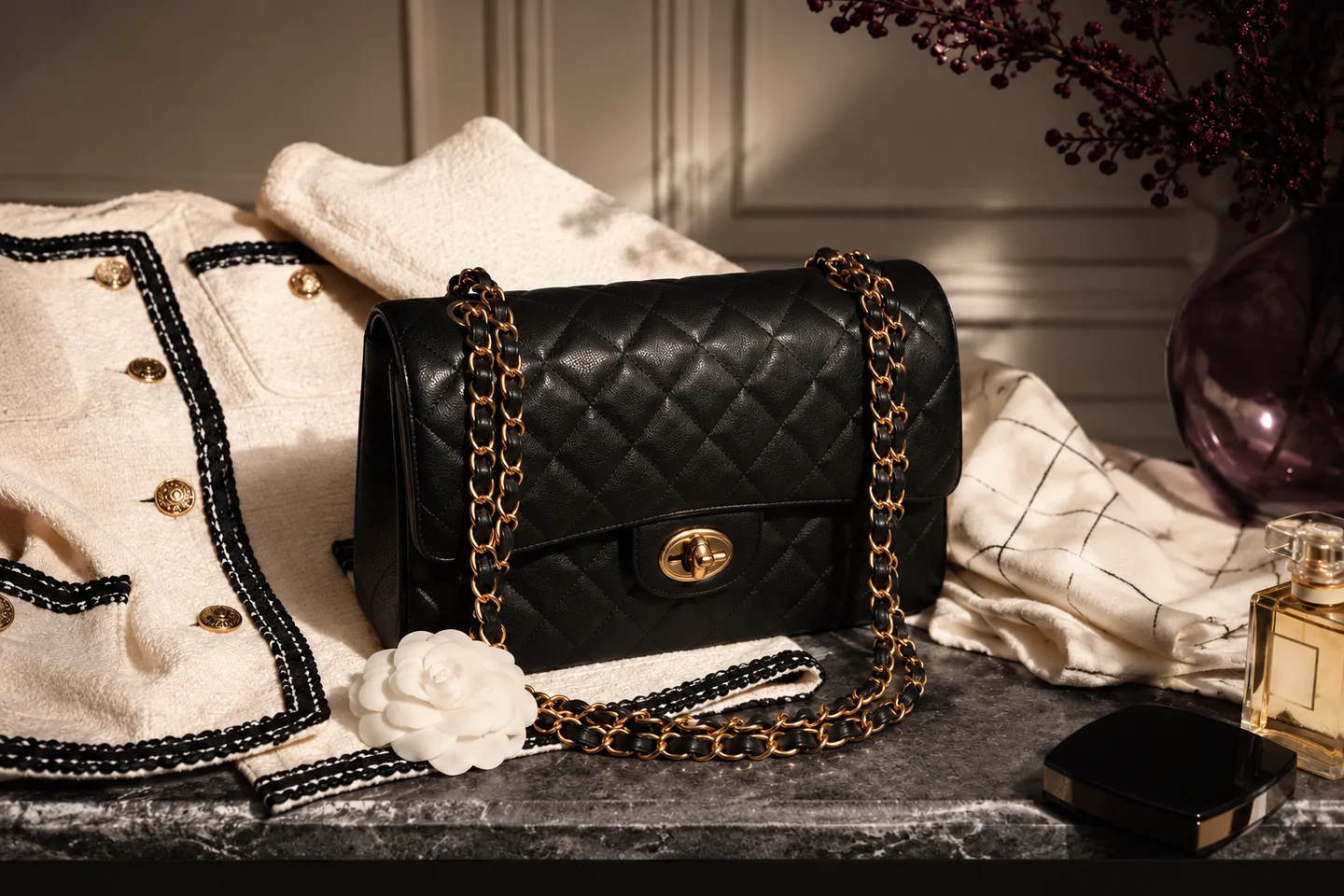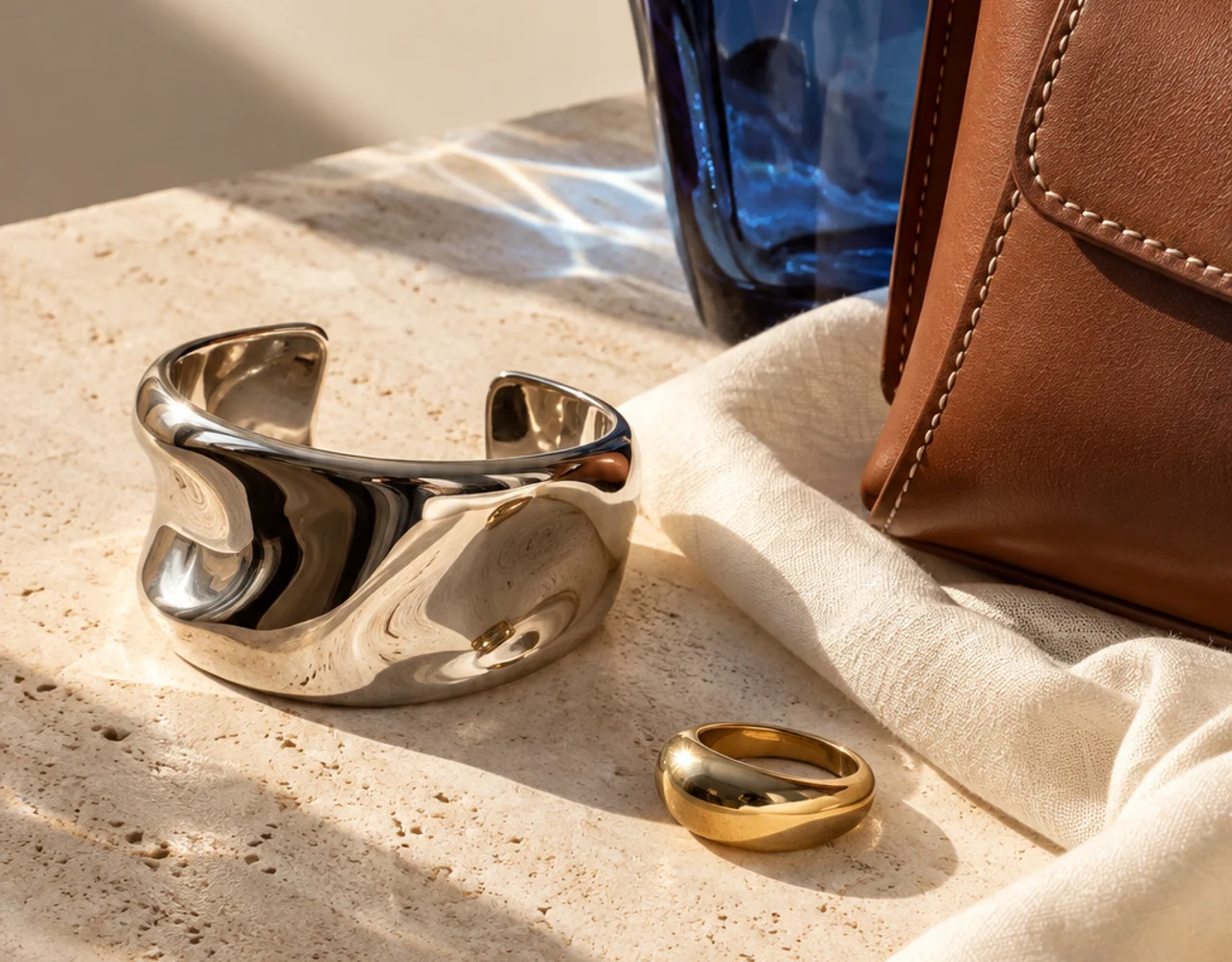
“When your own initials are enough.”
That is Bottega Veneta’s longstanding motto.[1] A luxury brand telling you that you don’t need someone else’s name on your bag.
It’s a lovely line. It’s also a very precise piece of positioning. It hands the customer a flattering reason to buy: you have taste, you trust it, and you don’t need to announce the label.
Even independence can be part of the sales pitch.
I love beautiful things. But we do ourselves a disservice when we assume marketing only works on the person who wants the obvious logo. It can also work on the person who studies the stitching, hunts for an unfamiliar designer, or takes quiet pride in choosing something understated.
Luxury has several ways to make a price feel justified. Knowing which appeals to you is useful long before anyone asks for your credit card.
Five reasons a premium can feel worth paying
Researchers Franck Vigneron and Lester Johnson distinguish five sources of prestige appeal.[2] In a shopping conversation, they sound like this:
- Quality: “Show me what makes it better.”
- Pleasure: “I want to enjoy it.”
- Individuality: “I’d love something I won’t see everywhere.”
- Recognition: “I like what it says about me.”
- Belonging: “These are people who appreciate what I appreciate.”
More than one can matter. The marketing makes a particular reason persuasive: the workshop demonstration, the fitting room, the limited edition, the recognizable detail, the invitation.
Which appeals to you? Explore your mix in 10 choices →
A craft story can sell more than quality.
If you care about construction, a luxury brand has a useful way to earn your attention: show you the work.
At Hermès in the Making in Singapore, artisans demonstrated their techniques with tools and materials brought out of the workshops.[4] That gives the price something concrete to stand on: skill you can watch, and work you can ask about.
But “handmade” can also sell a feeling.
In a 2015 study, participants considering soap as a Mother’s Day gift were willing to pay about 17% more, on average, when it was described as handmade rather than machine-made. The description changed. The soap did not.
The researchers found that part of the appeal came from a sense that handmade products contain love. In another experiment, the preference for handmade wine glasses was stronger when the gift was meant to express love than when the goal was to give the best-performing glasses.[5]
So “handmade” can tell me something about construction, and it can make a gift feel more personal. I may value both. I want to know which one is making the price feel right.
The question before checkout: What did the hands actually do, and where can I see or feel the difference?
The price can become part of the pleasure.
Sometimes the answer is wonderfully uncomplicated. The jacket feels beautiful on. The room has a view you want to wake up to. For three days, someone else thinks about what you need.
I don’t need to turn that into an investment thesis. Enjoying something is a reason to buy it.
What interests me is how the promise of a better experience can help shape the experience itself. In a wine experiment, participants rated the same wine as more pleasant when it was presented at $90 rather than $10; activity in a brain region associated with experienced pleasantness also increased.[6] The wine hadn’t changed. The expectation had.
I explored that study in Can a higher price make the same wine taste better?
Anticipation, setting, and story can become part of what we enjoy. I want to know how much I value them alongside the thing itself.
The question before checkout: Am I paying for the view, the service, the feeling of being somewhere special, or all three?
“Only a few made” and “only a few left” are different pitches.
“Only 50 made” invites you to imagine owning something unusual. “Only two left” tells you much less. It could mean a tiny edition, or a busy Saturday.
Shoppers respond to that difference. Heribert Gierl and Verena Huettl found that for products suited to conspicuous consumption, scarcity caused by limited supply earned more favorable evaluations than scarcity caused by high demand. For products not suited to that use, the advantage reversed.[7] Rarity and popularity do different work.
In two other studies, limited-quantity messages had a stronger effect on purchase intentions than limited-time messages, especially for symbolic brands. Part of the reason was the feeling of competing with other buyers.[8]
So a limited edition can serve two motives at once: owning something unusual, and being the one who managed to get it. A sold-out shelf doesn’t prove stock was held back on purpose. And pressure to decide isn’t a reason to love what you’re buying.
The question before checkout: What exactly is scarce—the edition, the material, this color, or this store’s stock?
Understated does not mean unrecognized.
Recognition is about what a purchase communicates, and to whom. The audience can be a roomful of people or one person whose taste you respect.
In a 2010 study, one group of relatively wealthy shoppers with little expressed need for status could rank the tested handbags by price without being told the brands.[3] They did not need the names printed beneath the photographs to recognize what they were looking at.
People who know a design may recognize the brand and have a good idea of what it costs. Choosing an understated bag can mean loving how it looks and also enjoying the occasional knowing glance. Those pleasures aren’t at odds.
This is where Bottega’s motto comes back. “When your own initials are enough” flatters a particular kind of taste. A quiet brand can still offer a way to be recognized.
Price can be part of that promise, too. In a 2014 study, higher prices increased preference over part of the tested range under some combinations of shoppers’ existing and experimentally heightened desires for rarity or conspicuousness.[9] More expensive did not always mean more desirable.
For one shopper, expense can communicate exclusivity or achievement. For another, it raises expectations of quality or enjoyment. Price can appeal to several motives, which is why I wouldn’t treat every expensive purchase as an attempt to impress someone.
The question before checkout: What does the extra money buy me, and how much of the appeal depends on someone else recognizing it?
Sometimes the appeal is who comes with it.
Wanting people to notice what you own is different from wanting people to enjoy it with you.
In communities around Saab, Ford Bronco, and Macintosh, Albert Muñiz and Thomas O’Guinn documented shared identity, traditions, and a sense of responsibility to other members.[10] The brand gave people something to gather around and help each other understand.
Porsche supports that kind of connection through its clubs, a Golf Circle, and a GT Circle. In a 2023 interview, its head of global community management credited the clubs’ beginnings to customers themselves.[11]
That gives a purchase a social life: people to meet, knowledge to swap, something to look forward to. The friendships can be real. So can their value to the brand.
I’ve also seen how much a single welcome can matter. My 13-year-old son loves jewelry. When he visited David Yurman with his father and grandmother to have a piece repaired, a salesperson showed him what was new, let him try things on, and helped him put together a wish list. He was wearing sweats. His interest was taken seriously.
I wanted to shop with that salesperson because of how he had treated my son. That is a different experience from joining an owners’ club, but it made the value of feeling welcome very clear to me.
The question before checkout: Would I still enjoy the company without buying the next thing?
One purchase can answer more than one desire.
These motives are easier to separate on the page than in a fitting room.
A watch might draw you in with its movement, feel wonderful on your wrist, mark a milestone, and give you something to talk about with another collector. You don’t have to pick one reason and disown the rest.
Research on luxury examines the relationship between personal and social meanings.[12] That gives me two useful questions. What do I get from this privately? And what happens when other people see it?
Neither answer is a character verdict. What matters is which part justifies the purchase, and whether the product delivers it.
I want to understand the premium.
I don’t need every purchase to pass a test of pure practicality. A beautiful thing can earn its place by making an ordinary day more enjoyable. That is a reason.
I do want to distinguish a quality claim from a feeling. “This construction will last longer” calls for evidence. “I love how this feels” describes an experience. “People will recognize it” concerns an audience. All three can influence a purchase, but they do not establish the same kind of value.
When those reasons blur, a moving story starts to look like proof of better construction. An invitation starts to look like a reason to buy something you only mildly wanted.
I still want the pleasure of finding something wonderful. I want a brand to make its case. And if the case is that I have exceptional taste, I would like to notice the compliment before I pay for it.
Sources + Methodology
- Bottega Veneta, People
Official source for the brand’s longstanding motto. The reading of its customer appeal is Jude’s editorial interpretation, not a claim about measured campaign effectiveness.
- Vigneron & Johnson (1999), A Review and a Conceptual Framework of Prestige-Seeking Consumer Behavior
A conceptual synthesis distinguishing quality, enjoyment, uniqueness, social, and conspicuous value. The plain-language shopping statements in this essay are editorial interpretations.
- Han, Nunes & Drèze (2010), Signaling Status with Luxury Goods: The Role of Brand Prominence
Study 3 examined recognition and price rankings of particular handbags with the brand names normally printed beneath the photographs omitted. It did not remove logos from the bags. Group findings do not establish why any individual chooses an understated design.
- Hermès, Hermès in the Making in Singapore
Official account of the 2022 exhibition and its artisan demonstrations. It documents the brand’s presentation, not its effect on purchasing.
- Fuchs, Schreier & van Osselaer (2015), The Handmade Effect: What’s Love Got to Do with It?
Study 4 recruited 302 US adults and analyzed 263 after excluding participants whose mothers were no longer alive. Incentive-compatible willingness to pay for a Mother’s Day soap gift averaged $6.56 for handmade versus $5.63 for machine-made. This is a specific gift setting, not a universal 17% sales premium. Study 3 compared gift goals for wine glasses.
- Plassmann, O’Doherty, Shiv & Rangel (2008), Marketing actions can modulate neural representations of experienced pleasantness
Twenty participants tasted wines under manipulated price cues during fMRI. The study concerns reported enjoyment and associated neural activity, not boutique purchases or a universal benefit of higher prices.
- Gierl & Huettl (2010), Are scarce products always more attractive?
The effect of supply-based versus demand-based scarcity depended on a product’s suitability for conspicuous consumption. The outcome was product evaluation, not a guaranteed retail price premium.
- Aggarwal, Jun & Huh (2011), Scarcity Messages
Two studies compared quantity and time limits; consumer competition helped explain differences in purchase intentions. These findings do not diagnose an individual shopper.
- Hwang, Ko & Megehee (2014), When higher prices increase sales
Experimental luxury choices depended on price and combinations of existing and induced rarity/conspicuousness motives. Findings do not test the exact boutique phrase “this is very expensive” or establish actual store-sales gains.
- Muñiz & O’Guinn (2001), Brand Community
Ethnographic and online evidence from Saab, Ford Bronco, and Macintosh communities. Supports the discussion of social connection, not a causal claim about luxury sales.
- Porsche Christophorus (2023), We Are Aware of the Power of Emotions
Official interview with Sebastian Mertke describing Porsche’s community programs and their customer-led origins. An example of brand practice, not an independent effectiveness study.
- Dubois, Jung & Ordabayeva (2021), The psychology of luxury consumption
Research review addressing tensions in luxury consumption, including personal and social meanings. It supports the wider discussion, not predictions about an individual reader.
This essay draws on conceptual frameworks, experiments, a research review, and official brand materials. Their methods and settings differ. Reported preferences, purchase intentions, willingness to pay, actual transactions, and neural activity are different outcomes. Brand examples illustrate positioning; the cited studies do not establish those campaigns’ effectiveness. Practical shopping questions and connections between the studies and brand examples are Jude’s editorial interpretations. The companion quiz is an original, research-informed exercise in reported preferences. Its labels, questions, and scoring rules have not been validated as a psychological assessment and cannot identify the motives of a public figure or someone observed in a store.